The Familect Line
An Interactive Archive of Family Dialect Language with LLMs
Description
In every group or community that identifies itself as family, a private language quietly takes shape. A mispronounced word that stuck, a pet’s strange habit that became a verb or a shared disaster that turned into a joke. Linguists call this a familect, a contraction of family and dialect. Unlike slang or jargon, a familect can’t be learned from the outside. It only makes sense if you were there.
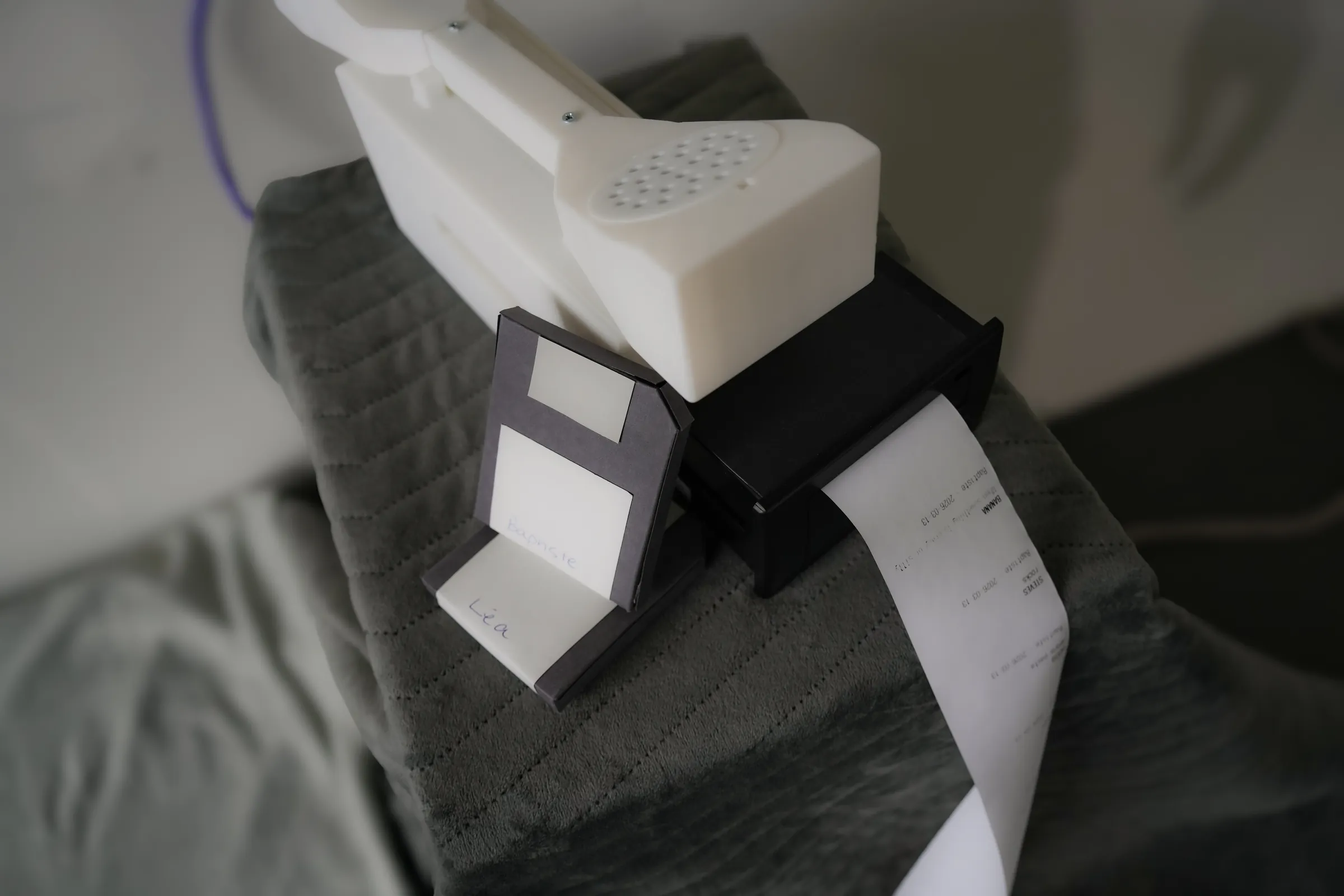
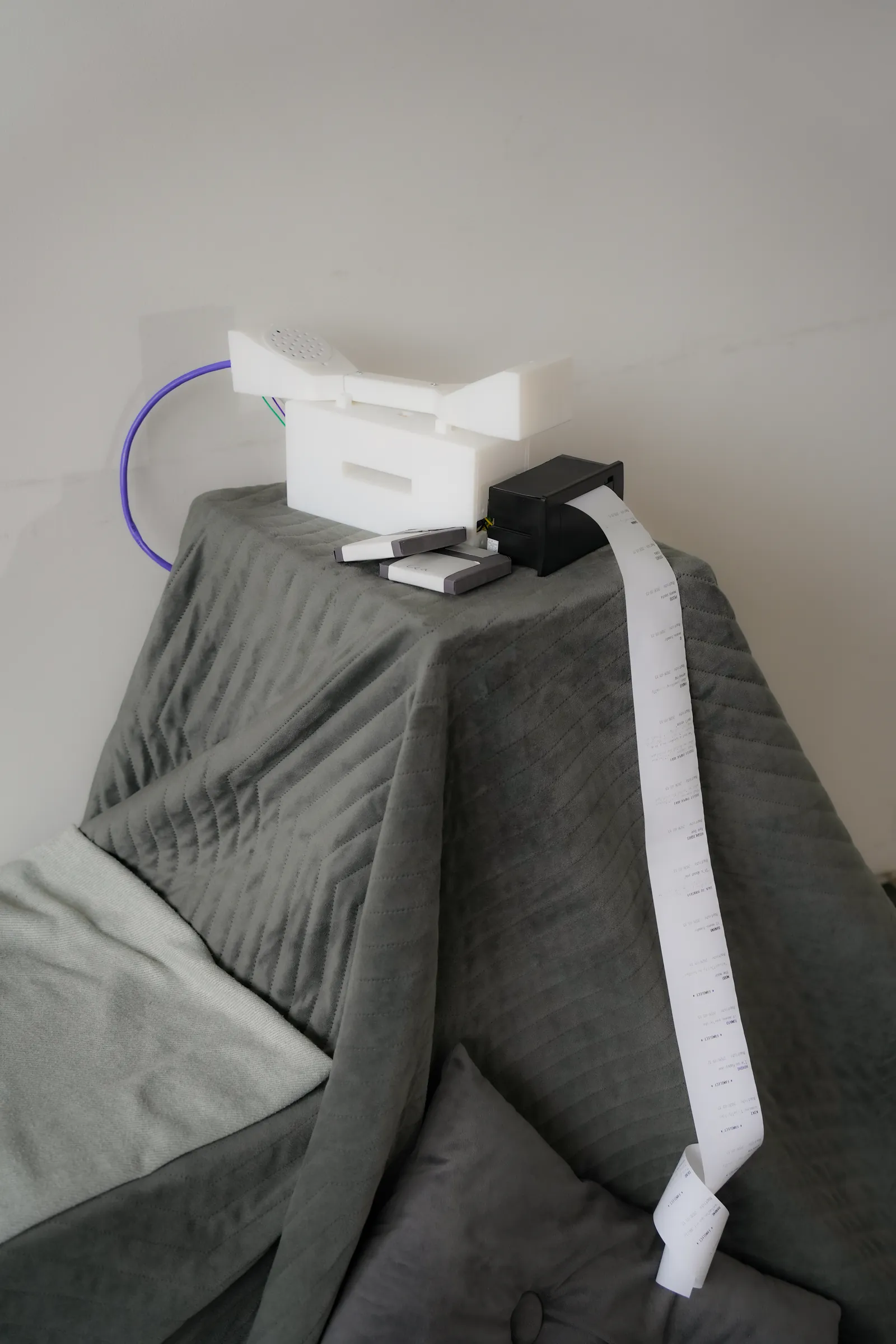
Visitors are invited to sit at a small table a piece of furniture built for private conversation in a shared space. A telephone sits on the table. A floppy disk is your key. Insert it, pick up the handset, and the dictionary begins to speak. It listens, asks questions, and guides each person to surface a word, a memory. If a new word emerges, it is printed and added to the collective dictionary. This is a long parchemin of all the familect entries.
The installation invites visitors to reflect on their own familect, identify fun anecdotes, share one with the machine and with other visitors.
Medium
Raspberry Pi, remote LLM APIs, NFC interface (floppy disk form factor), telephone audio system, thermal printer, local database, custom-built telephone bench
System & Tech
The installation operates through a computational setup:
- •Raspberry Pi as the local host
- •Remote Large Language Model (LLM) for dialogue generation
- •Telephone interface as the primary interaction device
- •NFC-based token (disguised as a floppy disk) for interaction initiation
- •Local database for storing and structuring collected entries
- •Telephone bench as the primary physical interface
- •Thermal printer for real-time archival output
The system functions as both listener and mediator. It records fragments of conversations — words, expressions, partial narratives — and translates them into entries within a growing archive.
Collaborator